AI in Logistics and Supply Chain Management
The logistics and supply chain industry is undergoing a significant transformation with the integration of Artificial Intelligence (AI). From optimizing routes to automating warehousing, AI is driving efficiency, reducing costs, and improving decision-making across the supply chain. This article explores how AI in logistics and supply chain is revolutionizing the industry.
Route Optimization and Fleet Management
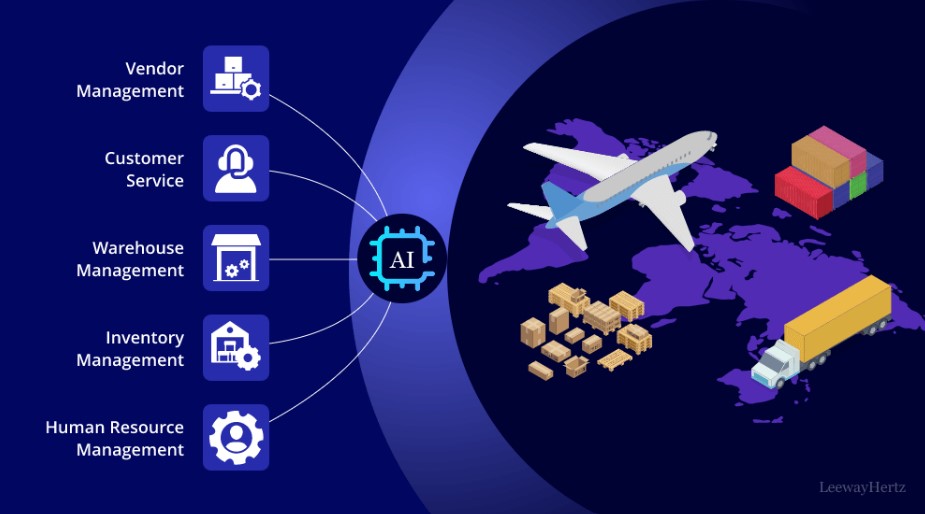
AI algorithms are being used to optimize delivery routes, ensuring that goods are transported in the most efficient and cost-effective manner. By analyzing traffic patterns, weather conditions, and other variables, AI can suggest the best routes, thereby reducing fuel consumption and delivery times. This level of optimization also extends to fleet management, where AI can predict maintenance needs, reducing downtime and increasing the lifespan of vehicles.
Inventory Management and Demand Forecasting
Accurate inventory management is crucial for maintaining a smooth supply chain. AI systems can analyze sales data, market trends, and other factors to predict demand with high accuracy. This helps businesses maintain optimal inventory levels, reducing the risk of overstocking or stockouts. Additionally, AI can automate the ordering process, ensuring that inventory is replenished in a timely manner.
AI-Driven Chatbots for Customer Support
Customer support is an essential component of logistics and supply chain management. AI chatbot development companies are creating advanced chatbots that can handle customer inquiries, track shipments, and resolve issues in real-time. These AI-driven chatbots not only enhance customer satisfaction but also reduce the workload on human support teams, allowing them to focus on more complex tasks.
Warehouse Automation
AI is also playing a pivotal role in automating warehouse operations. Robotics powered by AI can handle repetitive tasks such as sorting, packing, and moving goods within a warehouse. This automation speeds up the order fulfillment process and reduces the margin for error, leading to higher efficiency and lower operational costs.
Conclusion
The integration of AI in logistics and supply chain management is transforming the industry by improving efficiency, reducing costs, and enhancing customer satisfaction. As AI continues to evolve, its role in logistics and supply chain management will only grow, offering even more innovative solutions for businesses to stay competitive. Partnering with specialized AI development companies can help businesses fully leverage the potential of AI in their supply chain operations.