
August Bank Holiday 2025: History, Meaning, and How People Celebrate
The August Bank Holiday 2025 is one of the most anticipated long weekends in the United Kingdom. Falling near the end of summer, it gives people a valuable opportunity to relax, travel, and spend time with friends and family before the busy autumn season begins. In 2025, the August Bank Holiday will take place on Monday, August 25, creating a long weekend for many workers and students.
For millions of people across the UK, this holiday is more than just a day off from work. It represents the final celebration of summer, a chance to enjoy outdoor festivals, family gatherings, shopping events, and short vacations. From large music festivals to local fairs and seaside trips, the August Bank Holiday has become a cultural tradition that people look forward to every year.
This article explores the origins of the August Bank Holiday, its historical background, how it is celebrated today, and why it remains an important public holiday in the United Kingdom.
What Is the August Bank Holiday?
The August Bank Holiday is a public holiday observed in the United Kingdom. On this day, banks, many offices, and several businesses close, allowing employees to enjoy a day of rest. Most workers receive the day off with pay, which creates a long weekend when combined with Saturday and Sunday.
The holiday is celebrated on the last Monday of August in England, Wales, and Northern Ireland, while Scotland celebrates its summer bank holiday earlier in the month, typically on the first Monday of August.
Because it occurs near the end of summer, the August Bank Holiday often marks the unofficial conclusion of the summer holiday season. Families use the opportunity to travel, attend events, or enjoy outdoor activities before schools reopen and autumn begins.
The History of the August Bank Holiday
The origins of the August Bank Holiday date back to the 19th century. In 1871, a British banker and politician named Sir John Lubbock introduced the Bank Holidays Act, which officially established several public holidays in the United Kingdom.
Originally, the August Bank Holiday was celebrated on the first Monday in August in England and Wales. At the time, the purpose of these holidays was to provide workers with scheduled breaks throughout the year, something that was uncommon during the industrial era.
However, in 1971, the UK government passed the Banking and Financial Dealings Act, which moved the August Bank Holiday to the last Monday of August. This change was made to create a more predictable long weekend and extend the summer holiday period for families.
This adjustment also helped boost tourism and travel, as people could plan longer trips before the start of the school year.
Why Bank Holidays Are Important
Bank holidays serve several important purposes in society. They allow workers to take time off, promote relaxation, and encourage social activities. In modern life, where work schedules can be demanding, public holidays provide essential opportunities for rest and recreation.
Economically, bank holidays also stimulate spending. Retail stores often offer special sales, travel companies see increased bookings, and restaurants and entertainment venues experience higher customer traffic.
In addition, these holidays strengthen social connections. Families gather, communities organize events, and people participate in cultural celebrations that reinforce national identity and traditions.
How People Celebrate the August Bank Holiday
The August Bank Holiday weekend is famous for its lively atmosphere and wide variety of activities. People across the UK celebrate the occasion in different ways depending on their interests.
Outdoor Festivals
One of the most popular ways to celebrate the holiday is by attending festivals. Music festivals, food festivals, and cultural events are organized across the country during this weekend. These events attract thousands of visitors and feature performances, local cuisine, and entertainment.
Family Trips
Many families take advantage of the long weekend to travel. Popular destinations include seaside towns, national parks, and countryside retreats. Beaches often become crowded with families enjoying the warm weather and outdoor activities.
Community Events
Local communities frequently organize fairs, parades, and markets during the August Bank Holiday weekend. These events create a festive environment and give people the chance to support local businesses and artists.
Home Gatherings and Barbecues
For those who prefer a quieter celebration, the long weekend is ideal for spending time at home with friends and family. Barbecues, garden parties, and casual gatherings are common ways people mark the occasion.
Popular Events Held During the Holiday
Several well-known events take place during the August Bank Holiday weekend each year. These gatherings attract visitors from around the world and contribute to the holiday’s vibrant reputation.
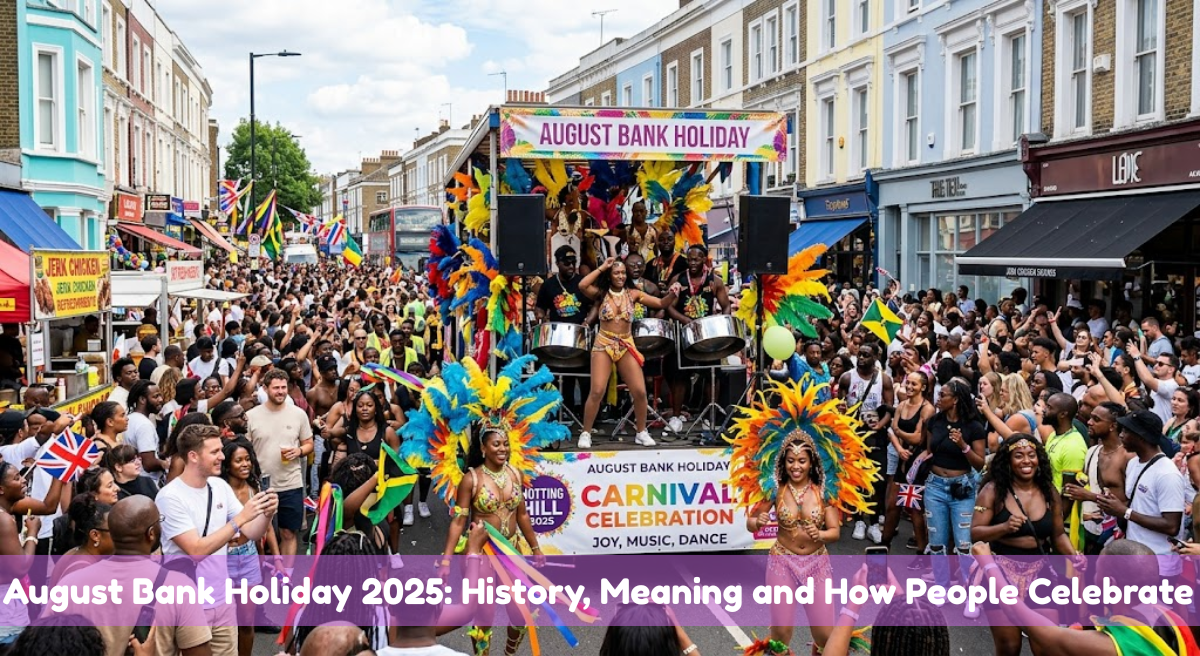
One of the most famous celebrations is the Notting Hill Carnival in London. This colorful festival celebrates Caribbean culture with music, dance, costumes, and street parades. It is one of the largest street festivals in Europe.
Other popular events include:
- Music festivals across the countryside
- Food and drink festivals
- Art exhibitions and cultural fairs
- Outdoor sports competitions
These events highlight the diversity of entertainment available during the long weekend.
Travel and Tourism During the Weekend
The August Bank Holiday is one of the busiest travel periods in the UK. Millions of people take short vacations or day trips during this time. As a result, highways, trains, and airports often experience increased traffic.
Popular travel destinations include:
- Coastal towns such as Brighton and Bournemouth
- National parks like the Lake District
- Historic cities including York and Bath
- Rural countryside areas perfect for hiking and relaxation
Hotels and vacation rentals frequently reach full capacity during this weekend, so travelers usually plan their trips in advance.
Economic Impact of the August Bank Holiday
The August Bank Holiday has a significant impact on the economy. Retailers often launch special promotions, encouraging shoppers to take advantage of the long weekend sales.
The tourism industry also benefits greatly. Hotels, restaurants, amusement parks, and tourist attractions experience increased demand during the holiday period.
Events and festivals generate revenue for local businesses and help support artists, performers, and vendors. For many communities, the August Bank Holiday weekend is one of the most profitable times of the year.
Weather and Seasonal Significance
Because the holiday occurs at the end of August, the weather usually remains warm and pleasant in many parts of the UK. Although the British climate can be unpredictable, late summer often provides comfortable conditions for outdoor activities.
For students and families, the holiday also marks the final days of summer vacation before the new school year begins. This timing makes the long weekend especially meaningful for parents and children who want to enjoy one last summer outing.
Tips for Enjoying the August Bank Holiday
To make the most of the August Bank Holiday weekend, people often plan ahead. Here are some helpful tips:
Plan travel early: Transportation and accommodation can become crowded, so early bookings help avoid stress.
Check event schedules: Festivals and community activities often require tickets or reservations.
Prepare for traffic: Roads and public transport systems can be busy during the long weekend.
Consider local activities: Exploring nearby parks, museums, or events can be a relaxing alternative to long-distance travel.
Spend time with loved ones: The holiday is a perfect opportunity to reconnect with family and friends.
The Cultural Importance of the Holiday
Beyond its recreational benefits, the August Bank Holiday has become a cultural tradition in the United Kingdom. It symbolizes relaxation, celebration, and community engagement.
The holiday reflects the country’s appreciation for work-life balance and the importance of taking time to recharge. Over the decades, it has evolved into a nationwide celebration that combines entertainment, travel, and cultural events.
For many people, the long weekend represents the joyful closing chapter of summer.
FAQs About August Bank Holiday 2025
When is the August Bank Holiday in 2025?
In 2025, the August Bank Holiday will be observed on Monday, August 25 in England, Wales, and Northern Ireland.
Is the August Bank Holiday celebrated in Scotland?
Scotland celebrates a summer bank holiday earlier in the month, usually on the first Monday of August, rather than the last Monday.
Are businesses closed during the August Bank Holiday?
Many banks, offices, and government services close for the day. However, retail stores, restaurants, and entertainment venues often remain open.
Why was the date changed to the last Monday in August?
The date was moved in 1971 to create a longer and more predictable summer weekend for families and travelers.
What are the most popular activities during the holiday?
Common activities include attending festivals, traveling to seaside towns, visiting family, hosting barbecues, and exploring local events.
Is public transportation affected during the holiday?
Transportation services usually operate on modified schedules, and travel demand increases significantly during the weekend.
Conclusion
The August Bank Holiday 2025 offers a perfect opportunity for relaxation, celebration, and social connection. Taking place on Monday, August 25, the holiday provides a much-needed break at the end of summer and encourages people to spend quality time with friends and family.
From vibrant festivals and exciting travel opportunities to peaceful countryside retreats and family barbecues, the long weekend has something for everyone. Over time, the August Bank Holiday has grown into an important cultural event that reflects the spirit of summer and the joy of shared experiences.
As the final long weekend before autumn arrives, it continues to hold a special place in the calendar for millions of people across the United Kingdom.