How to Check Transmission Fluid: A Step-by-Step Guide for Car Owners
Introduction
Your car’s transmission is kind of like the middleman between your engine and your wheels—it makes sure your car moves forward, backward, and everywhere in between. And just like any hardworking part, it needs proper care. One of the most critical yet often overlooked maintenance tasks is keeping an eye on the transmission fluid.
So, why is it so important? Well, transmission fluid lubricates the gears, keeps everything cool, and helps your transmission shift smoothly. Without it, you’re looking at clunky gear shifts, overheating, or—yikes—a complete transmission failure.
Let’s dive into everything you need to know about how to check transmission fluid, when to do it, what signs to look for, and how to keep your ride in tip-top shape.
Why Transmission Fluid Matters
Before we get into the nitty-gritty of checking it, here’s why transmission fluid deserves your attention:
-
Lubrication: It reduces friction between the moving parts inside your transmission.
-
Cooling: It helps dissipate heat generated by friction and pressure.
-
Hydraulic function: In automatic transmissions, it also acts as a hydraulic fluid to facilitate gear shifting.
-
Protection: It keeps internal components clean and free from debris and corrosion.
If the fluid level is too low or dirty, you could face some serious (and expensive) consequences.
Signs Your Transmission Fluid Needs Attention
Your car will usually give you a few hints when something’s off. Keep an eye (and ear) out for these red flags:
-
Rough or delayed shifting
-
Unusual noises (whining, grinding, or clunking)
-
Transmission slipping
-
Fluid leaks under the car
-
A burning smell
-
Warning lights on the dashboard
If you notice any of these symptoms, it’s time to pop the hood and inspect that fluid.
When Should You Check Transmission Fluid?
Timing is everything. While recommendations can vary depending on the vehicle make and model, a good rule of thumb is:
-
Every 30,000 to 60,000 miles for most automatic transmissions.
-
Once a month if your car has high mileage or you do a lot of stop-and-go driving.
-
Before long road trips, especially if you’ll be towing or driving in extreme temperatures.
Always refer to your owner’s manual for the manufacturer’s maintenance schedule.
How to Check Transmission Fluid: Step-by-Step Instructions
Ready to get your hands a little dirty? Here’s how to check transmission fluid like a pro:
What You’ll Need:
-
Clean rag or paper towel
-
Gloves (optional, but helpful)
-
A flat and safe surface to park
-
Vehicle owner’s manual
Step 1: Park the Car on Level Ground
Make sure your vehicle is parked on a flat surface. Engage the parking brake for extra safety. This helps get an accurate fluid reading.
Step 2: Warm Up the Engine
Start the engine and let it run for about 5–10 minutes. Transmission fluid expands when heated, and it’s important to check it at operating temperature for an accurate measurement.
Note: Some vehicles require the engine to be turned off while checking. Always double-check your owner’s manual.
Step 3: Open the Hood and Locate the Dipstick
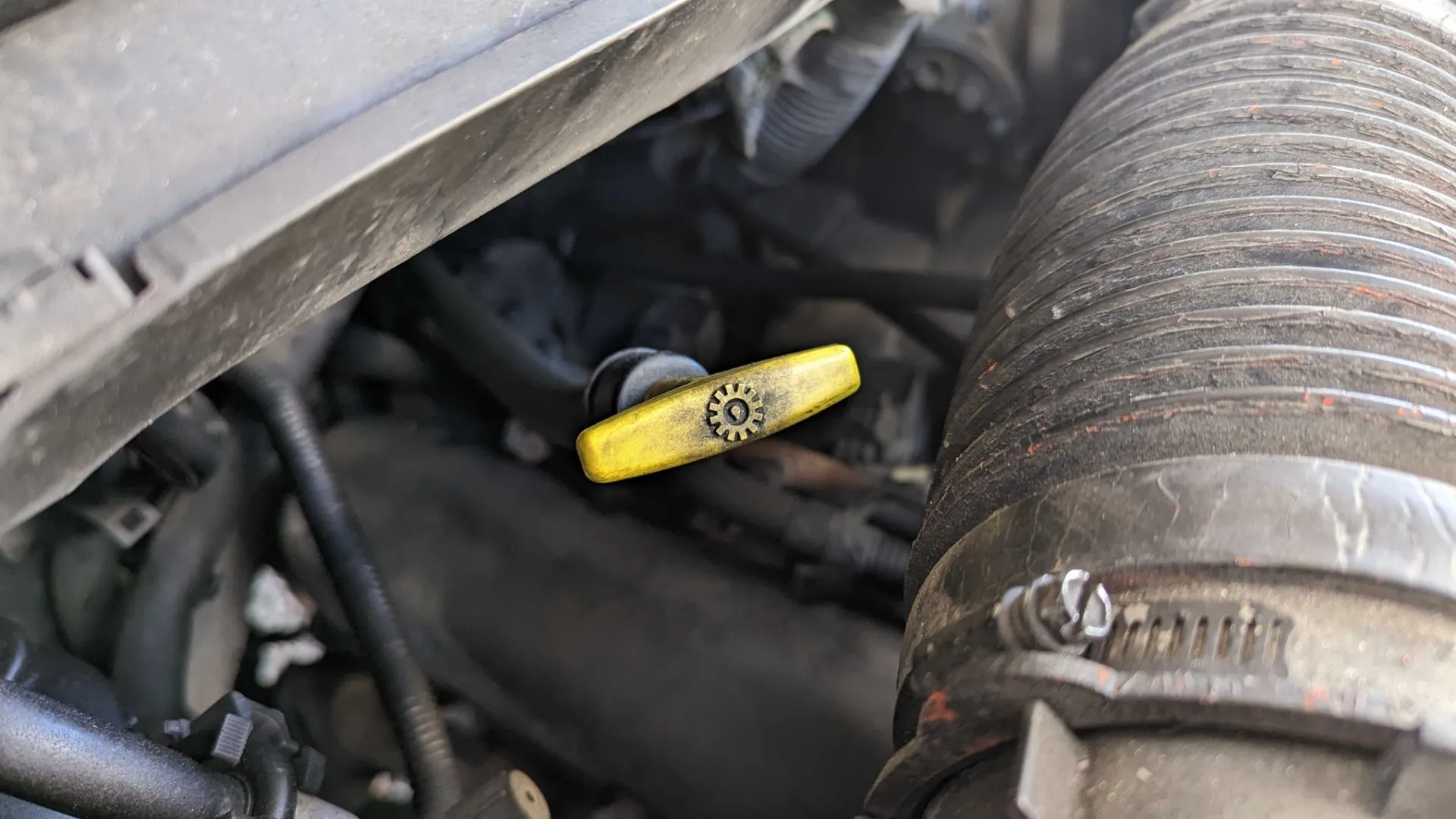
Open the hood and find the transmission fluid dipstick. It’s usually labeled and often has a red, pink, or yellow handle. In front-wheel-drive cars, you’ll typically find it near the transaxle; in rear-wheel-drive models, it’s near the back of the engine.
Step 4: Pull the Dipstick Out
Carefully remove the dipstick, wipe it clean with your rag, then reinsert it fully. Wait a second, then pull it back out again.
Step 5: Check the Fluid Level
Look at the markings on the dipstick—usually labeled “Full,” “Hot,” and “Add” or “Cold.” The fluid should be between the “Full” and “Add” marks. If it’s low, it’s time to top it off.
Step 6: Inspect Fluid Color and Smell
Healthy transmission fluid is usually bright red and smells sweet. If it’s dark brown, black, or has a burnt odor, that’s a clear sign you need a fluid change or even a transmission inspection.
Step 7: Reinsert the Dipstick and Close the Hood
Once you’ve checked the level and condition, put the dipstick back securely and close the hood.
What to Do If Your Fluid Is Low
If the level is below the recommended mark:
-
Buy the correct type of transmission fluid (check your owner’s manual).
-
Use a funnel to slowly add fluid through the dipstick tube.
-
DO NOT overfill—too much fluid can cause just as many problems as too little.
-
Recheck the level after adding and drive the car for a short distance to let it circulate.
Can You Check Transmission Fluid in a Sealed System?
Ah yes, the modern headache—sealed transmissions. These systems have no dipstick and are intended to be maintenance-free. However, “sealed” doesn’t mean invincible.
If your car has a sealed system:
-
You’ll need a mechanic or special equipment to check the fluid.
-
Some models have a check plug on the transmission case, which still requires lifting the car and specific tools.
In this case, unless you’re a seasoned DIYer with the right gear, it’s best to consult a professional.
Common Mistakes to Avoid
Checking transmission fluid is straightforward, but a few slip-ups can throw a wrench in your efforts. Avoid these rookie errors:
-
Not warming up the engine (cold fluid gives false readings).
-
Using the wrong type of fluid (not all fluids are created equal!).
-
Overfilling (can cause foaming or pressure issues).
-
Ignoring dirty or burnt-smelling fluid (it’s a red flag!).
-
Checking on a slope or uneven surface (inaccurate results).
How Often Should Transmission Fluid Be Replaced?
While checking the level is key, don’t forget that the fluid wears out over time. Here’s a general idea:
-
Automatic transmissions: Change every 30,000 to 60,000 miles.
-
Manual transmissions: Every 30,000 to 50,000 miles.
-
CVT transmissions: Check with the manufacturer—fluid and timing vary widely.
Also, consider a transmission flush (not just a top-off) if the fluid is severely degraded.
Benefits of Regular Transmission Checks
Routine checks might seem tedious, but they pay off in the long run:
-
Avoid costly repairs (transmission overhauls ain’t cheap)
-
Improve fuel efficiency
-
Enhance performance and smooth shifting
-
Extend vehicle life
Your transmission is one of the most expensive components to replace—show it some love!
FAQs About Transmission Fluid
1. Can I drive with low transmission fluid?
You can, but you shouldn’t. Low fluid can lead to poor performance, overheating, and permanent damage. Always top up before driving if levels are low.
2. How do I know which transmission fluid to use?
Your car’s owner’s manual will list the specific type needed. Don’t guess—using the wrong fluid can cause damage.
3. How much does it cost to replace transmission fluid?
A fluid change costs between $100 to $300, depending on whether you go to a shop or do it yourself. A full flush might cost more.
4. What color is bad transmission fluid?
Healthy fluid is red or pink. Dark brown, black, or cloudy fluid (especially if it smells burnt) means it’s time for a change.
5. Can I add new fluid to old transmission fluid?
Yes, but only to top it off. If the fluid is dirty or burnt, a full change is better than mixing old with new.
6. Do manual transmissions use fluid too?
Absolutely. While the fluid type and function differ from automatic systems, manual transmissions still require fluid for lubrication.
Final Thoughts
Knowing how to check transmission fluid is one of those small car maintenance habits that make a big difference. It’s quick, easy, and can save you thousands of dollars in repair bills—not to mention a ton of stress.
Whether you’re a total beginner or a seasoned weekend mechanic, taking a few minutes to check your transmission fluid can keep your car shifting smoothly for years to come. So the next time your ride starts feeling a little sluggish, pop that hood and give the transmission fluid a look—you might just catch a problem before it starts.