Sunshine Skyway Bridge Collapse: A Tragic Moment in American Bridge History
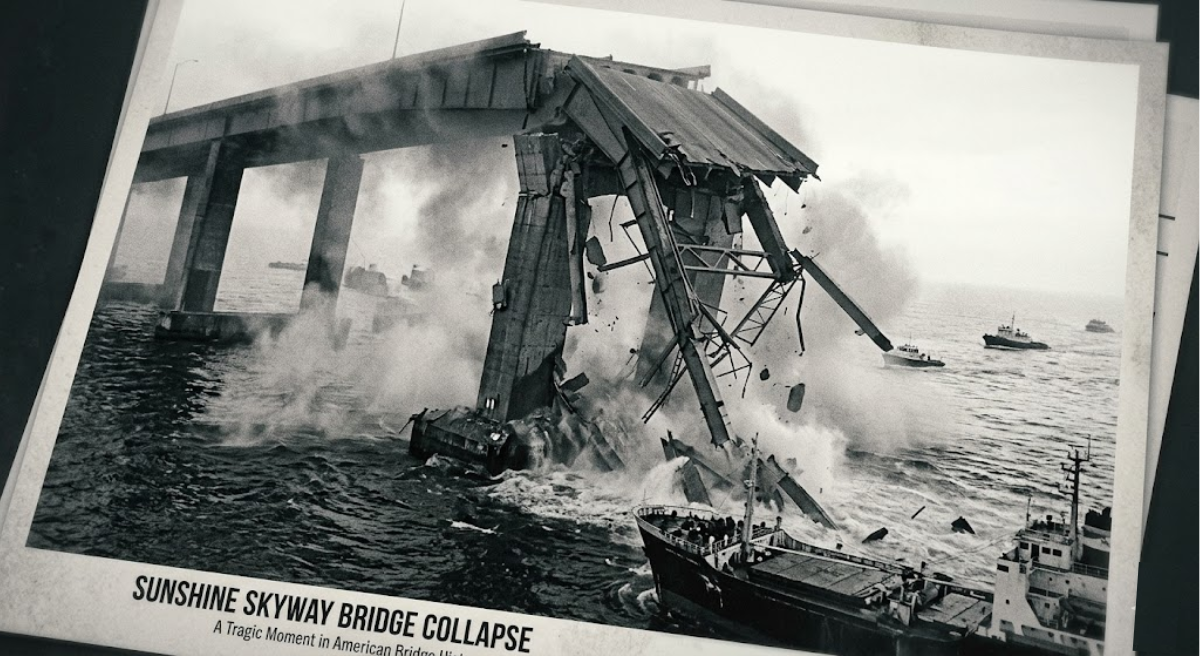
The Sunshine Skyway Bridge collapse remains one of the most tragic and unforgettable transportation disasters in the United States. The incident occurred on May 9, 1980, in Florida, when a large cargo ship struck the bridge during a severe storm. Within seconds, a large section of the bridge fell into Tampa Bay, sending vehicles, a bus, and several people plunging into the water below.
This devastating event shocked the nation and led to significant changes in bridge design, navigation safety, and maritime regulations. The collapse not only caused tragic loss of life but also reshaped how engineers and authorities approach the protection of major bridges around the world.
In this article, we will explore the history of the Sunshine Skyway Bridge, the events leading up to the collapse, the rescue efforts, and how the disaster influenced modern bridge engineering and safety measures.
The Original Sunshine Skyway Bridge
Before the disaster, the original Sunshine Skyway Bridge was an important transportation link connecting St. Petersburg and Bradenton in Florida. The bridge crossed the mouth of Tampa Bay and was a crucial route for commuters, tourists, and commercial vehicles.
Completed in 1954, the bridge quickly became one of the most recognizable structures in the region. It allowed travelers to avoid long detours around the bay and significantly reduced travel time between the Gulf Coast communities.
However, like many bridges built during that time, the structure had limited protection against large ships navigating nearby waters. Tampa Bay was a busy shipping channel, and vessels frequently passed beneath the bridge.
While the bridge was considered safe under normal conditions, few anticipated the catastrophic chain of events that would occur in the early morning hours of May 9, 1980.
The Morning of the Collapse
On the morning of May 9, 1980, the cargo ship MV Summit Venture was traveling through Tampa Bay during a powerful thunderstorm. The ship was navigating toward the Port of Tampa when heavy rain, strong winds, and limited visibility created extremely dangerous conditions.
As the storm intensified, the ship’s pilot lost sight of the bridge structure ahead. Without enough time to react, the massive vessel drifted off course and struck one of the bridge’s support columns.
The impact caused a massive structural failure. A 1,200-foot section of the bridge collapsed almost instantly, sending several vehicles and a Greyhound bus into Tampa Bay. The collapse happened so suddenly that many drivers had no warning at all.
One driver, however, narrowly avoided the disaster. A truck driver named Wes Perkins saw the roadway ahead disappear and managed to stop his vehicle just in time, preventing his truck from falling into the water.
Vehicles That Fell into the Bay
The collapse resulted in multiple vehicles plunging into Tampa Bay. Among them were several passenger cars and a Greyhound bus carrying travelers.
In total, six cars, a pickup truck, and the bus fell from the broken section of the bridge. The fall was nearly 150 feet into the water below, leaving little chance of survival for those inside the vehicles.
Unfortunately, 35 people lost their lives in the tragedy. The storm conditions and the sudden nature of the collapse made rescue operations extremely difficult.
The only survivor from the vehicles that fell was the driver of a pickup truck, who managed to escape and swim to safety despite injuries.
Rescue and Recovery Efforts
Emergency response teams quickly mobilized following the collapse. The U.S. Coast Guard, local police, firefighters, and volunteer divers rushed to the scene.
Because of the storm and dangerous conditions in Tampa Bay, rescue teams faced numerous challenges. Strong currents, limited visibility, and debris from the collapsed bridge made search efforts complicated and risky.
Divers worked tirelessly to locate the submerged vehicles and recover victims. Over the following days, cranes and specialized equipment were used to remove vehicles from the bay.
The recovery operation lasted several weeks as investigators worked to understand exactly what had happened.
Investigation into the Disaster
After the collapse, authorities launched a thorough investigation into the cause of the accident. The National Transportation Safety Board (NTSB) examined the ship’s navigation, weather conditions, and bridge design.
The investigation concluded that the primary cause was the collision between the cargo ship and one of the bridge’s support piers. Poor visibility caused by the storm played a significant role in the ship’s inability to maintain its course.
However, investigators also noted that the bridge lacked sufficient protection for its support columns. At the time, many bridges were built without modern ship-impact protection systems.
This meant that a large vessel striking a key support could cause catastrophic structural failure—exactly what happened in the Sunshine Skyway Bridge collapse.
Impact on the Local Community
The collapse deeply affected communities surrounding Tampa Bay. Families lost loved ones, and residents were shaken by the sudden tragedy.
In addition to the human loss, the disaster disrupted transportation across the region. With the bridge destroyed, commuters had to travel long distances around the bay, significantly increasing travel time.
The tragedy also became a defining moment in Florida’s history. Memorials were later established to honor the victims who lost their lives in the disaster.
The event served as a reminder of how critical infrastructure failures can have devastating consequences.
Construction of the New Sunshine Skyway Bridge
Following the collapse, authorities decided not just to repair the damaged bridge but to construct an entirely new and safer structure.
The new Sunshine Skyway Bridge was designed with advanced engineering techniques and stronger structural support. Construction began in the 1980s and the new bridge officially opened in 1987.
The modern bridge is a cable-stayed structure with tall towers and long spans that allow ships to pass safely underneath. It also includes protective barriers called “dolphins,” which are large concrete structures placed around bridge supports to absorb impacts from ships.
These features greatly reduce the risk of another catastrophic collision.
Today, the new bridge is considered one of the most beautiful bridges in the United States and has become an iconic landmark in Florida.
Engineering Lessons from the Collapse
The Sunshine Skyway Bridge collapse changed the way engineers approach bridge safety worldwide.
After the disaster, new guidelines were introduced to protect bridges located in busy shipping channels. Engineers began incorporating ship-impact protection systems, stronger pier designs, and improved navigation aids.
Modern bridges now often include:
- Protective barrier islands around support columns
- Advanced radar navigation systems for ships
- Stronger structural reinforcement for bridge piers
- Improved communication between ships and harbor authorities
These measures help prevent collisions and reduce the risk of structural failure.
The lessons learned from the Sunshine Skyway disaster continue to influence bridge design today.
Legacy of the Sunshine Skyway Bridge Collapse
More than four decades after the tragedy, the Sunshine Skyway Bridge collapse remains a powerful reminder of the importance of infrastructure safety.
The disaster led to improved maritime navigation procedures and stronger bridge construction standards across the United States.
It also showed the importance of emergency preparedness and rapid response in the aftermath of transportation accidents.
While the tragedy cannot be undone, the lessons learned have helped prevent similar disasters and improved safety for millions of travelers.
Today, the new Sunshine Skyway Bridge stands not only as a transportation link but also as a symbol of resilience and engineering progress.
FAQs
What caused the Sunshine Skyway Bridge collapse?
The collapse was caused when the cargo ship MV Summit Venture struck one of the bridge’s support columns during a severe storm on May 9, 1980. The collision caused a large section of the bridge to fall into Tampa Bay.
How many people died in the Sunshine Skyway Bridge disaster?
A total of 35 people lost their lives when several vehicles and a Greyhound bus fell into the bay after the bridge collapsed.
Did anyone survive the fall from the bridge?
Yes, one person survived. The driver of a pickup truck managed to escape his vehicle and swim to safety after falling into the water.
When was the new Sunshine Skyway Bridge built?
The replacement bridge was completed and opened to traffic in 1987. It was designed with improved safety features to prevent similar accidents.
What safety improvements were made after the collapse?
Engineers introduced ship-impact protection systems, stronger bridge supports, improved navigation aids, and protective barriers around bridge piers.
Is the Sunshine Skyway Bridge safe today?
Yes. The modern Sunshine Skyway Bridge is considered extremely safe and incorporates advanced engineering features designed to prevent collisions with ships.
Conclusion
The Sunshine Skyway Bridge collapse was a heartbreaking event that changed the course of bridge engineering and maritime safety. The tragic loss of life highlighted vulnerabilities in bridge design and the risks posed by large ships navigating busy waterways.
However, the disaster also led to significant improvements in safety standards and engineering practices. The new Sunshine Skyway Bridge stands as a testament to those lessons and continues to serve thousands of travelers every day.
While the memory of the tragedy remains, the legacy of the Sunshine Skyway Bridge collapse has helped make bridges around the world safer for future generations.