
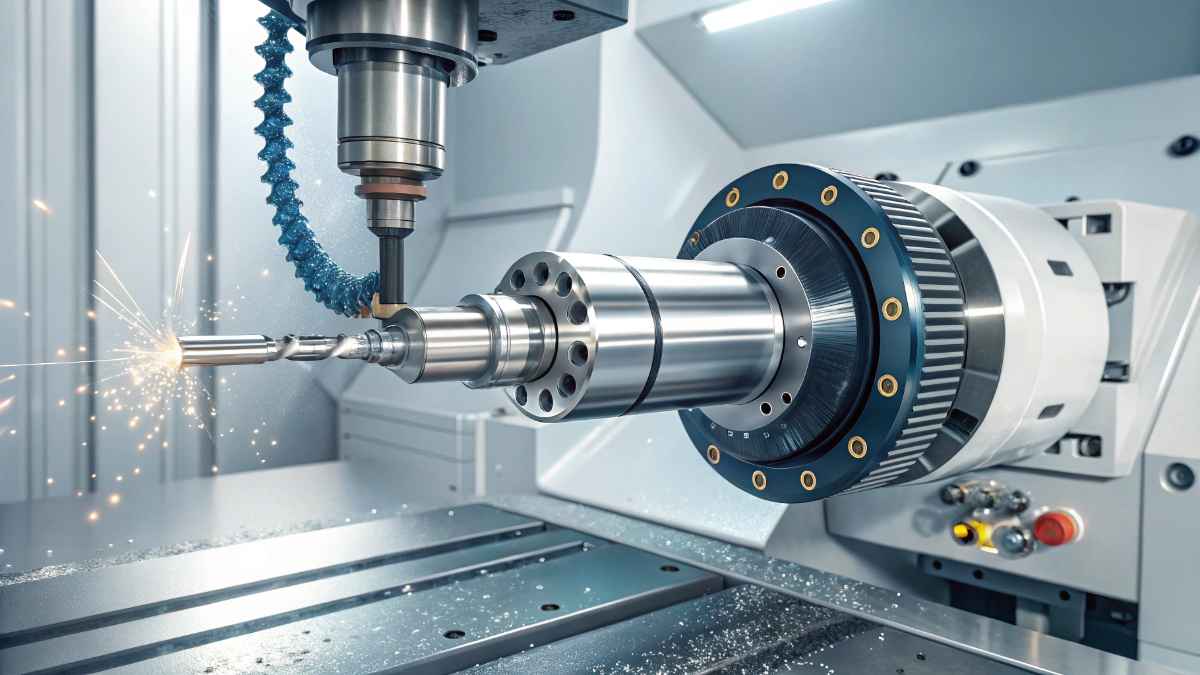
Winkelbohrspindel: The Complete Guide to Precision Angular Drilling Solutions
In the world of modern machining and manufacturing, precision and flexibility are critical for achieving high-quality results. One specialized tool that plays a vital role in complex machining operations is the winkelbohrspindel. Designed to enable angular drilling and machining in tight or difficult-to-reach spaces, this innovative component significantly enhances productivity, efficiency, and precision across various industries.
This in-depth guide explores everything you need to know about the winkelbohrspindel, including its function, design, applications, types, benefits, maintenance practices, and buying considerations. Whether you are a machinist, engineer, manufacturer, or industrial buyer, this comprehensive article will provide valuable insights.
Table of Contents
-
Introduction to Winkelbohrspindel
-
What Is a Winkelbohrspindel?
-
History and Evolution of Angular Drilling Technology
-
Core Components of a Winkelbohrspindel
-
How a Winkelbohrspindel Works
-
Types of Winkelbohrspindel
-
Fixed Angle Models
-
Adjustable Angle Systems
-
Multi-Spindle Configurations
-
CNC-Compatible Winkelbohrspindel
-
-
Key Advantages of Using a Winkelbohrspindel
-
Applications Across Industries
-
Automotive
-
Aerospace
-
Tool and Die Manufacturing
-
Construction Equipment
-
Custom Fabrication
-
-
Materials Used in Winkelbohrspindel Manufacturing
-
Installation and Setup Guidelines
-
Maintenance and Care Tips
-
Common Challenges and Solutions
-
Selecting the Right Winkelbohrspindel
-
Safety Considerations
-
Future Trends in Winkelbohrspindel Technology
-
Conclusion
-
FAQs
Introduction to Winkelbohrspindel
Precision machining has evolved dramatically over the past decades. Manufacturers increasingly demand tools that offer flexibility, speed, and exactness in every operation. The winkelbohrspindel has emerged as a vital solution when standard vertical or horizontal drilling approaches are insufficient.
Angular drilling requirements are common in industries where components have complex geometries. Instead of repositioning large workpieces, machinists can rely on a winkelbohrspindel to reach angled surfaces efficiently.
What Is a Winkelbohrspindel?
A winkelbohrspindel is an angular drilling spindle attachment designed to change the direction of drilling operations. The term originates from German engineering terminology:
-
Winkel = Angle
-
Bohr = Drill
-
Spindel = Spindle
Essentially, it is an angle head attachment that redirects the rotational axis of a machine tool, allowing drilling, tapping, or milling at specific angles—commonly 90 degrees, but also other custom angles.
It is typically mounted onto CNC machines, milling machines, or machining centers.
History and Evolution of Angular Drilling Technology
Angular drilling mechanisms were initially developed to reduce manual repositioning of workpieces. In early manufacturing environments, operators needed to manually rotate or reposition parts, which was time-consuming and introduced inaccuracies.
With the development of high-precision gear systems and compact bearing assemblies, the modern winkelbohrspindel was born. Today’s models feature:
-
High-speed capability
-
Advanced lubrication systems
-
CNC automation compatibility
-
Precision ground gears
Modern advancements have significantly increased efficiency and accuracy.
Core Components of a Winkelbohrspindel
Understanding the internal structure of a winkelbohrspindel helps users maximize its performance.
1. Housing
The protective outer casing that supports internal components.
2. Input Shaft
Connects directly to the machine spindle and transfers rotational force.
3. Gear Mechanism
High-precision bevel or spiral gears redirect motion at an angle.
4. Output Spindle
Delivers rotational energy to the cutting tool.
5. Bearings
High-load bearings ensure smooth and stable rotation.
6. Lubrication System
Maintains internal components and prevents overheating.
Each part plays a crucial role in maintaining accuracy and durability.
How a Winkelbohrspindel Works
The operating principle of a winkelbohrspindel is relatively straightforward but mechanically sophisticated.
-
The machine spindle rotates.
-
The rotational motion transfers to the input shaft.
-
Internal gears redirect the motion at a specified angle.
-
The output spindle drives the cutting tool.
This mechanism allows drilling in areas where traditional straight-line access is impossible.
Types of Winkelbohrspindel
Fixed Angle Models
These models operate at a predetermined angle, usually 90 degrees. They are ideal for repetitive industrial applications.
Adjustable Angle Systems
Adjustable models provide flexibility by allowing operators to change the drilling angle.
Multi-Spindle Configurations
These versions allow multiple drilling operations simultaneously, increasing productivity.
CNC-Compatible Winkelbohrspindel
Designed specifically for integration with CNC machining centers, offering automatic tool changes and programmable positioning.
Key Advantages of Using a Winkelbohrspindel
The winkelbohrspindel offers numerous benefits:
-
Improved Productivity
-
Reduced Setup Time
-
Enhanced Accuracy
-
Access to Tight Spaces
-
Increased Machine Versatility
-
Lower Labor Costs
By eliminating the need to reposition workpieces, manufacturers save both time and resources.
Applications Across Industries
Automotive Industry
Used for engine blocks, transmission housings, and structural components requiring angled drilling.
Aerospace Sector
Ensures precision in aircraft structural components where exact alignment is crucial.
Tool and Die Manufacturing
Helps create complex molds and dies with multi-angle features.
Construction Equipment
Used in heavy-duty components requiring angular holes.
Custom Fabrication
Ideal for unique designs and prototypes.
Materials Used in Winkelbohrspindel Manufacturing
Durability is essential. Most winkelbohrspindel units are manufactured from:
-
Hardened alloy steel
-
Tool-grade steel
-
High-strength aluminum housing
-
Ceramic or hybrid bearings
These materials ensure resistance to heat, friction, and mechanical stress.
Installation and Setup Guidelines
Proper installation ensures optimal performance.
-
Verify compatibility with machine spindle.
-
Secure mounting mechanism.
-
Check lubrication levels.
-
Calibrate angle alignment.
-
Test run at low speed before full operation.
Incorrect setup can lead to misalignment and premature wear.
Maintenance and Care Tips
Regular maintenance extends lifespan.
Daily Checks
-
Inspect for unusual vibrations.
-
Clean debris and coolant residue.
Weekly Inspection
-
Check gear lubrication.
-
Examine spindle alignment.
Periodic Overhaul
-
Replace worn bearings.
-
Inspect gear teeth condition.
Preventive maintenance reduces downtime significantly.
Common Challenges and Solutions
Overheating
Cause: Insufficient lubrication
Solution: Improve cooling and lubrication flow.
Vibration
Cause: Misalignment
Solution: Recalibrate spindle mounting.
Gear Wear
Cause: High-speed overload
Solution: Use correct RPM settings.
Addressing these issues early prevents costly repairs.
Selecting the Right Winkelbohrspindel
When choosing a winkelbohrspindel, consider:
-
Required angle
-
Maximum RPM
-
Torque capacity
-
Machine compatibility
-
Cooling method
-
Tool holding system
-
Application type
Investing in a high-quality model ensures long-term reliability.
Safety Considerations
Safety must never be overlooked.
-
Always follow manufacturer guidelines.
-
Avoid exceeding speed limits.
-
Use proper PPE.
-
Secure workpieces firmly.
-
Conduct routine inspections.
Proper handling prevents accidents and equipment damage.
Future Trends in Winkelbohrspindel Technology
Innovation continues in machining technology. Future winkelbohrspindel advancements may include:
-
Smart sensors for predictive maintenance
-
Lightweight composite materials
-
Enhanced gear coatings
-
Higher RPM capabilities
-
IoT integration for real-time monitoring
Automation and digitalization are shaping the next generation of precision tools.