
3 Key Vocabulary Words Related to Radiation: What You Really Need to Know
Introduction: Why Understanding Radiation Vocabulary Matters
Radiation—just hearing the word might conjure up images of glowing green goo or sci-fi movies gone wrong. But in reality, radiation is a natural part of our environment and plays a huge role in fields like medicine, energy, communication, and even space exploration.
Yet, the subject of radiation can feel intimidating if you’re not familiar with its terminology. That’s where this guide comes in. We’ll break down 3 key vocabulary words related to radiation in plain English, with real-world examples and explanations that stick.
Ready to demystify radiation? Let’s dive in!
The Basics of Radiation
Before we get into the key vocabulary, let’s lay a quick foundation.
🔹 What Is Radiation?
Radiation is the emission or transmission of energy in the form of waves or particles. It can travel through space, air, or other substances, depending on the type.
There are two main types:
-
Ionizing Radiation – High-energy radiation that can knock electrons out of atoms.
-
Non-ionizing Radiation – Lower energy, such as light, microwaves, or radio waves.
🔹 Where Do We Encounter Radiation?
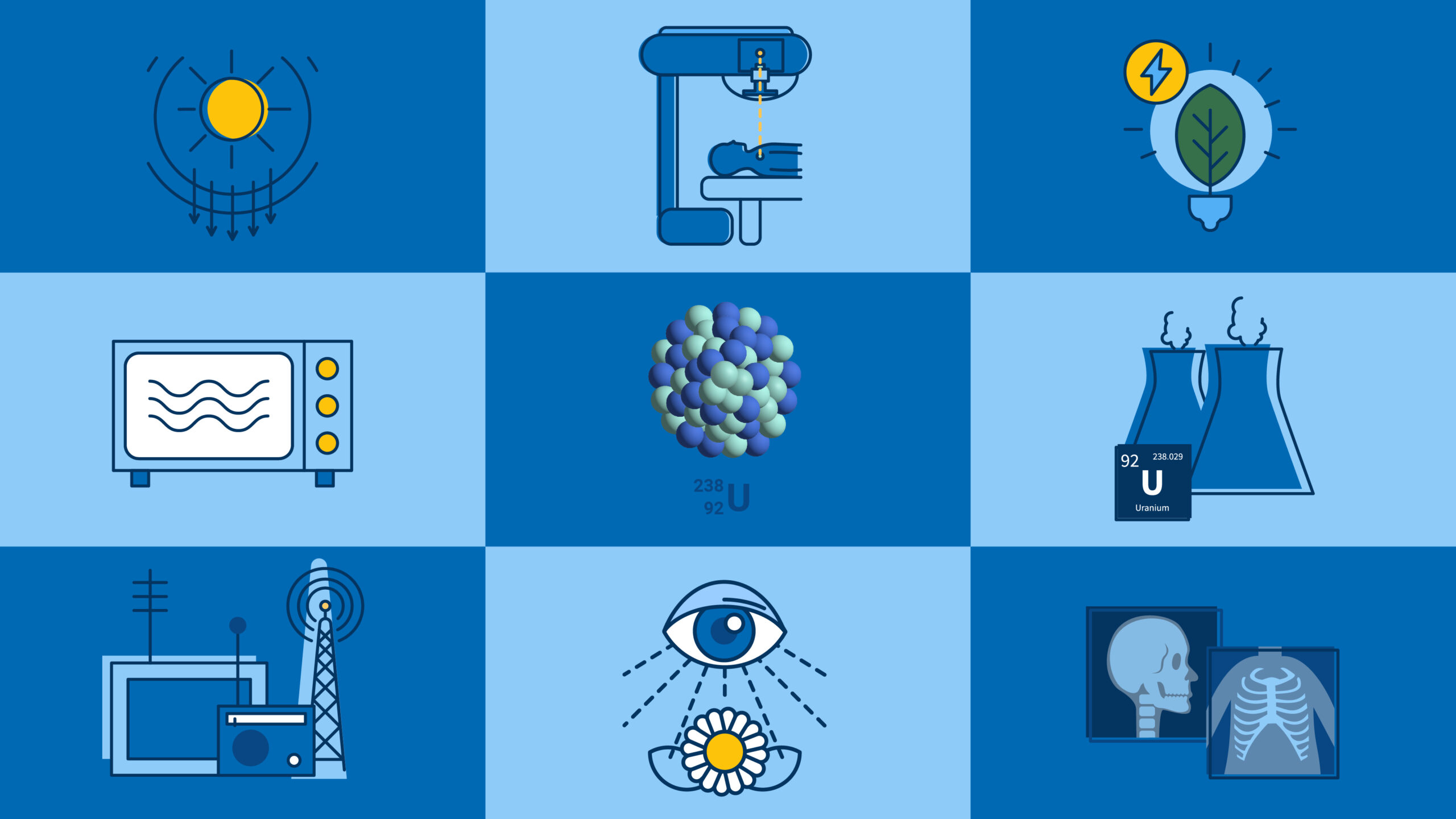
Radiation isn’t just something locked away in a nuclear reactor. It’s everywhere—in sunlight, X-ray machines, smoke detectors, smartphones, and even the food we eat.
Key Vocabulary Words Related to Radiation
Here are the big three terms you need to understand if you want to grasp radiation in a meaningful way.
1. Ionizing Radiation
Definition: Ionizing radiation is a type of radiation with enough energy to remove tightly bound electrons from atoms, thus creating ions.
Why It Matters
Ionizing radiation is the powerhouse of radiation types. It’s the form most people associate with nuclear reactions, radiation therapy, and radioactive hazards. Unlike non-ionizing radiation, this type can alter atoms and damage cells, which is both a blessing and a curse.
Examples of Ionizing Radiation
-
Alpha particles (from uranium or radon)
-
Beta particles (emitted from radioactive elements like tritium)
-
Gamma rays (used in medical imaging and cancer treatment)
-
X-rays (used in radiology)
-
Neutron radiation (from nuclear reactors)
Real-World Applications
-
Cancer treatment: Radiation therapy uses ionizing radiation to kill cancer cells.
-
Sterilization: Medical tools are sterilized using gamma rays.
-
Industrial radiography: Used to inspect metal parts and pipelines for structural integrity.
2. Radioactive Decay
Definition: Radioactive decay is the spontaneous transformation of an unstable atomic nucleus into a more stable one, often accompanied by the emission of radiation.
Why It Matters
This is the process that makes radioactive materials dangerous—or useful. Understanding radioactive decay is essential in nuclear energy, carbon dating, and monitoring environmental safety.
Types of Radioactive Decay
-
Alpha decay: Loses 2 protons and 2 neutrons (helium nucleus).
-
Beta decay: Converts a neutron into a proton, emitting an electron.
-
Gamma decay: Releases energy without changing the particle count.
Real-World Applications
-
Carbon dating: Measures decay of Carbon-14 to date fossils.
-
Power generation: Nuclear reactors use uranium decay to produce energy.
-
Geological dating: Determines the age of rocks and Earth itself.
3. Half-Life
Definition: A half-life is the amount of time it takes for half the atoms in a sample of a radioactive substance to decay.
Why It Matters
Half-life determines how long a radioactive substance remains hazardous and is key for medical dosages, waste disposal, and radiation protection.
Common Isotopes and Their Half-Lives
| Isotope | Half-Life | Usage |
|---|---|---|
| Carbon-14 | 5,730 years | Archaeological dating |
| Iodine-131 | 8 days | Thyroid treatment |
| Uranium-238 | 4.5 billion years | Geological dating |
Real-World Applications
-
Medicine: Adjusting dosages for radioactive tracers.
-
Nuclear safety: Managing waste based on decay timelines.
-
Forensics: Using isotope half-lives for crime scene investigation.
Additional Radiation-Related Vocabulary You Should Know
While the big three are crucial, here are some bonus terms that often come up in radiation discussions:
Radiation Dose
-
Measured in sieverts (Sv) or rem.
-
Describes the amount of radiation absorbed by a person.
Background Radiation
-
Natural environmental radiation from soil, cosmic rays, and food.
-
We’re exposed to it every day—about 2-3 mSv/year on average.
Radiotracer
-
A radioactive substance used in small amounts for medical imaging.
-
Example: Technetium-99m in heart or bone scans.
The Impact of Radiation on Health and Environment
Understanding radiation vocabulary isn’t just academic—it has real-life consequences.
Health Effects of Radiation
-
Low levels: Usually harmless due to natural repair mechanisms.
-
High levels: Can cause burns, radiation sickness, cancer, and genetic damage.
Environmental Concerns
-
Nuclear accidents (e.g., Chernobyl, Fukushima)
-
Radioactive waste disposal
-
Contaminated groundwater from mining or testing
Radiation Safety Measures
Because radiation can be both helpful and harmful, safety protocols are a must.
Protective Measures:
-
Time: Limit exposure duration.
-
Distance: Increase space between you and the source.
-
Shielding: Use lead aprons, concrete walls, etc.
Regulatory Bodies:
-
IAEA (International Atomic Energy Agency)
-
EPA (Environmental Protection Agency)
-
NRC (Nuclear Regulatory Commission)
FAQs About Radiation Vocabulary
What are the most important vocabulary words related to radiation?
The top three are ionizing radiation, radioactive decay, and half-life. They form the foundation of most discussions around radiation in science, medicine, and industry.
What’s the difference between radiation and radioactivity?
-
Radiation is the energy emitted.
-
Radioactivity is the process by which unstable atoms release radiation.
Is all radiation harmful?
Nope! Not all radiation is dangerous. For example, visible light and radio waves are types of non-ionizing radiation, which are generally safe.
How do scientists measure radiation?
They use tools like Geiger counters and dosimeters to measure dose rates in sieverts (Sv) or gray (Gy).
Why is understanding half-life so important?
It helps determine how long a material will remain radioactive, guiding decisions in medicine, nuclear waste management, and environmental cleanup.
Conclusion: Mastering the Language of Radiation
Radiation may sound like a topic for scientists in lab coats, but once you learn a few essential terms, it becomes less mysterious and more manageable. The three key vocabulary words—ionizing radiation, radioactive decay, and half-life—aren’t just jargon. They’re the cornerstones of understanding radiation’s power and potential.
Whether you’re a student, educator, healthcare worker, or just a curious mind, knowing these terms helps you make sense of the technologies, treatments, and safety measures that impact our lives every day.
So next time someone brings up radiation, you won’t just nod politely—you’ll know exactly what they’re talking about!